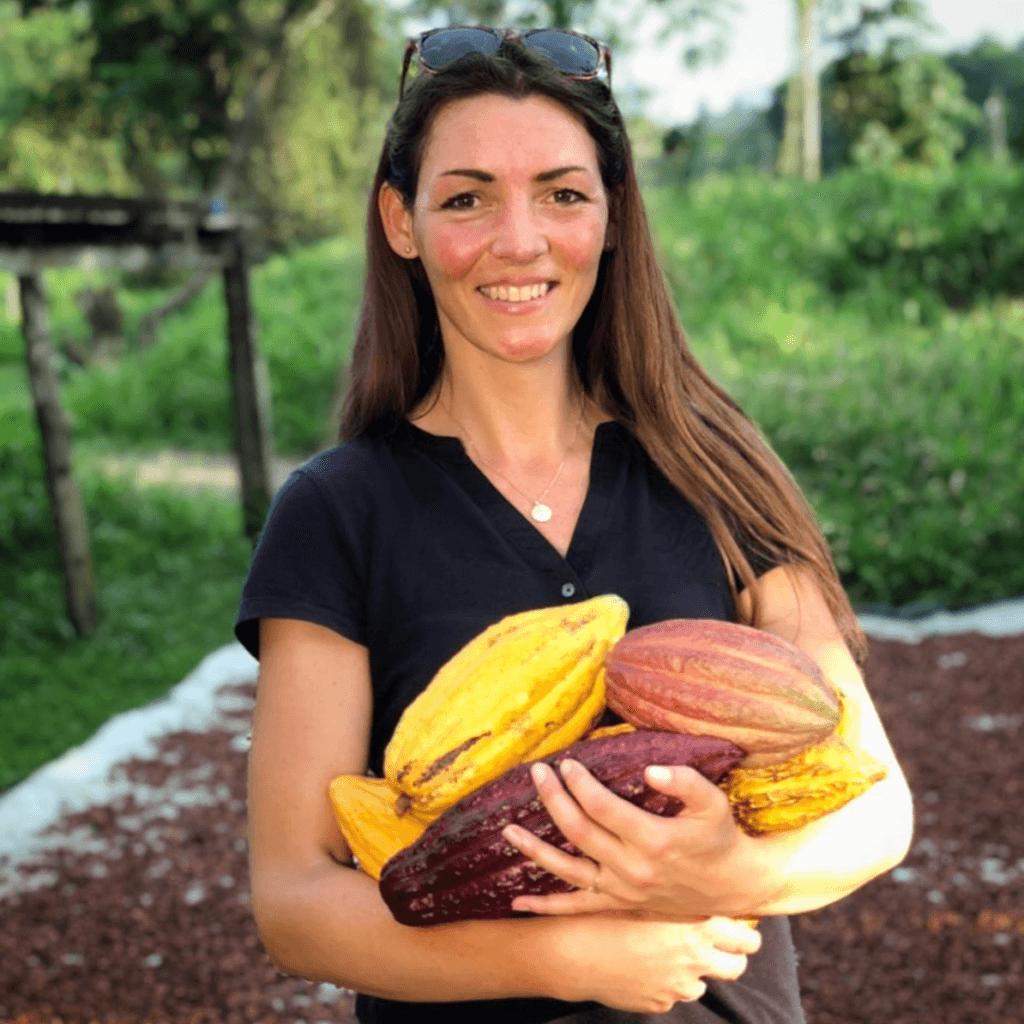
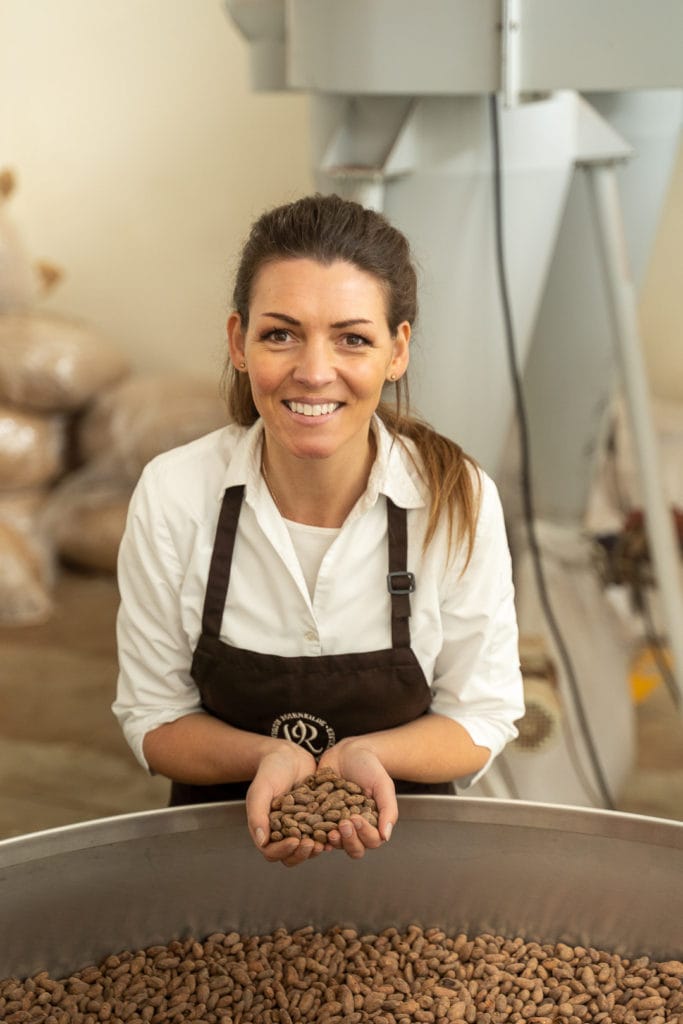
Vigdis Rosenkilde – Founder and chocolate maker at Vigdis Rosenkilde Chocolate. Oslo, Norway. Level 3 IICCT Chocolate Taster.
IICCT:
Tell us about your work with chocolate and cacao.
VR:
I have a chocolate brand, Vigdis Rosenkilde. The chocolate is made in Peru, and normally I am very much involved in the whole process.
I also run chocolate classes, which is a significant part of my income. After the first lockdown there was a short period when I was able to hold physical classes. But mostly through the last year with Corona the restrictions have not allowed this. Now obviously everything is going digital, and I’m thankful that I have a lot of booked classes coming up.
IICCT:
Are you reaching a wider audience because of digital?
VR:
Totally, and there is room for a lot more people. It gives me freedom. So let’s be thankful for the good stuff, this is giving us lots of opportunities.
IICCT:
Were you travelling to teach?
VR:
No, I have only taught in Norway. I am open to teaching elsewhere. But I am very focused on the Norwegian market, because it is a big market with only a few other actors.
IICCT:
When did you start working with chocolate?
VR:
I have been working with chocolate for more than ten years. I started because I wanted to create my own dream job. I wanted to work with raw ingredients, I wanted to learn something new and I wanted to travel, and I feel most grounded in nature. Then I read an article about chocolate and cacao. There were two things in this article I found especially exciting. Firstly: how to make chocolate. I ate a lot of chocolate and I love natural ingredients. And I am normally curious about how things are made. But I had never thought about how to make chocolate. And I think this is normal. I also read that there are a lot of cacao varieties, that they taste different from one another. For me at that point there were two chocolates, dark chocolate and milk chocolate.
So I got super curious. But ten years ago I had no network in this business, especially not within cacao. It was a lot easier to learn how to make confectionary. I attended classes here in Oslo, and in Europe. It was a lot of fun. I started using all these Norwegian ingredients to make confectionary. I was picking blueberries, raspberries, sea buckthorn. And I started to produce them for restaurants and speciality shops.
But then after five years, for various reasons, I rethought. That was not what I was going to do! I was going to work with cacao, I was going to the jungle. I was going to learn about cacao.
IICCT:
So when you had this revelation, what did you do then?
VR:
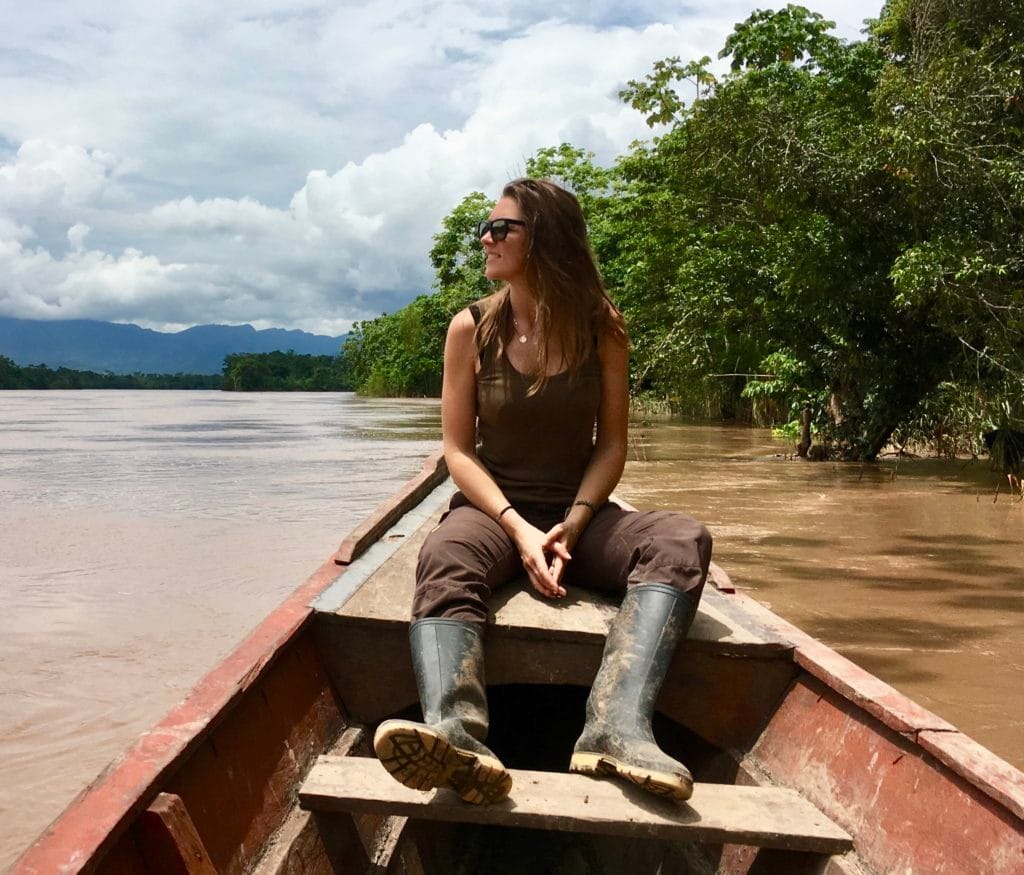
By that time I knew some people in the cacao business. And I went to one of Amma Chocolate’s cacao plantations in Brazil. It was a pretty small farm in the most beautiful surroundings. A sandy riverbank, with no other farms to be seen. We had bonfires in the evening. I had morning swims in the river at sunrise, while watching the mist among the trees turn golden. The sounds of the jungle, the smell, the colors and the energy all awakened my senses and I felt connected and drawn to the place. I was there only with the lovely farming family, and was able to stay for three days. To get out of there we rode horses, and crossed the river in a canoe. And I thought, this is exactly what I would like to experience more of. I would like to make this part of my life.
I really wanted to learn about cacao, and to learn about the culture, and how to source. But I needed money to be able to travel, to change my business and build something up. So I sold my apartment, and I went to Latin America. Since that first time in Brazil, I have spent more than a year in Latin America. I’ve had the privilege to spend time at more than 30 plantations. I’ve tasted a lot of amazing cacao and I’m learning something new at each place. I’ve been in Peru, Honduras, Ecuador and Nicaragua. But mainly Peru, because that is where I had built the greatest network. From those trips and that network I figured out my cooperation with Cacaosuyo, who make my chocolate.
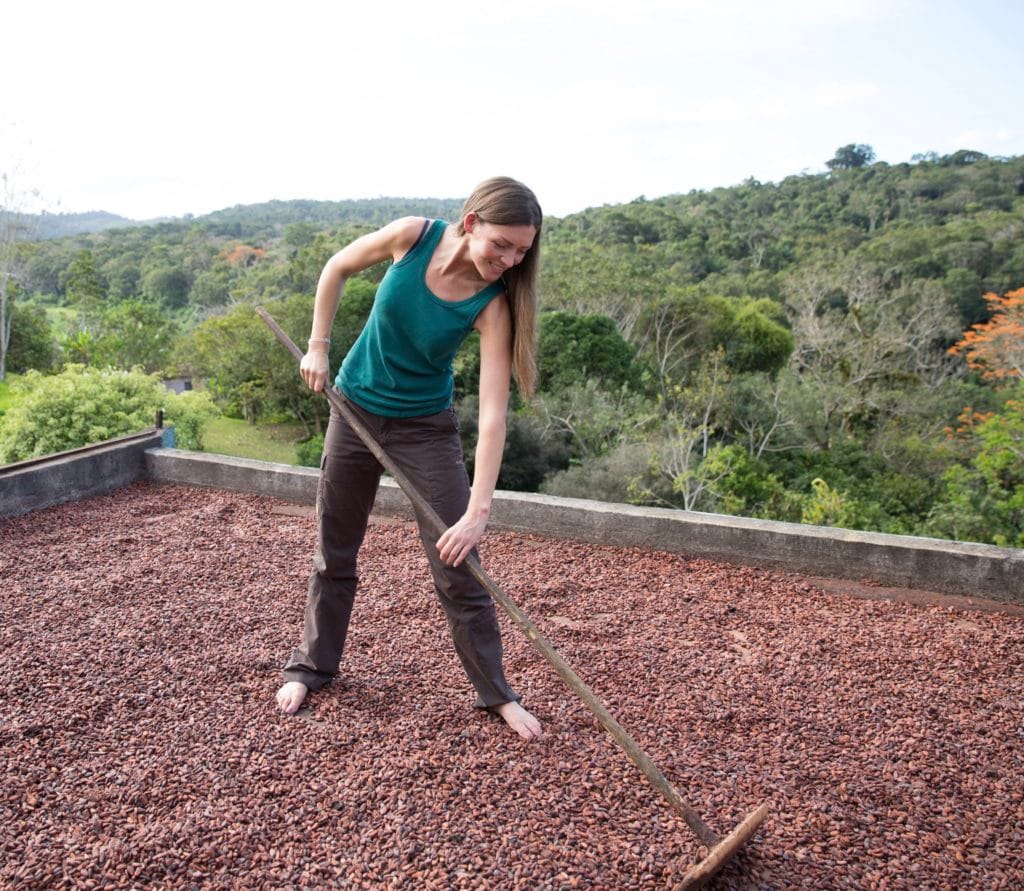
I do all my distribution myself, and the importing. It is important for me to source my own beans, so now I source and purchase all my cacao directly.
IICCT:
Where are your chocolates sold now?
VR:
They are sold in around a hundred shops in Norway, and one in Denmark. But I am 100% focused on Norway. I’ve had some enquiries, but still my packaging and everything is in Norwegian. In fact my latest customer is actually the castle in Norway. I got my first order from them today!
IICCT:
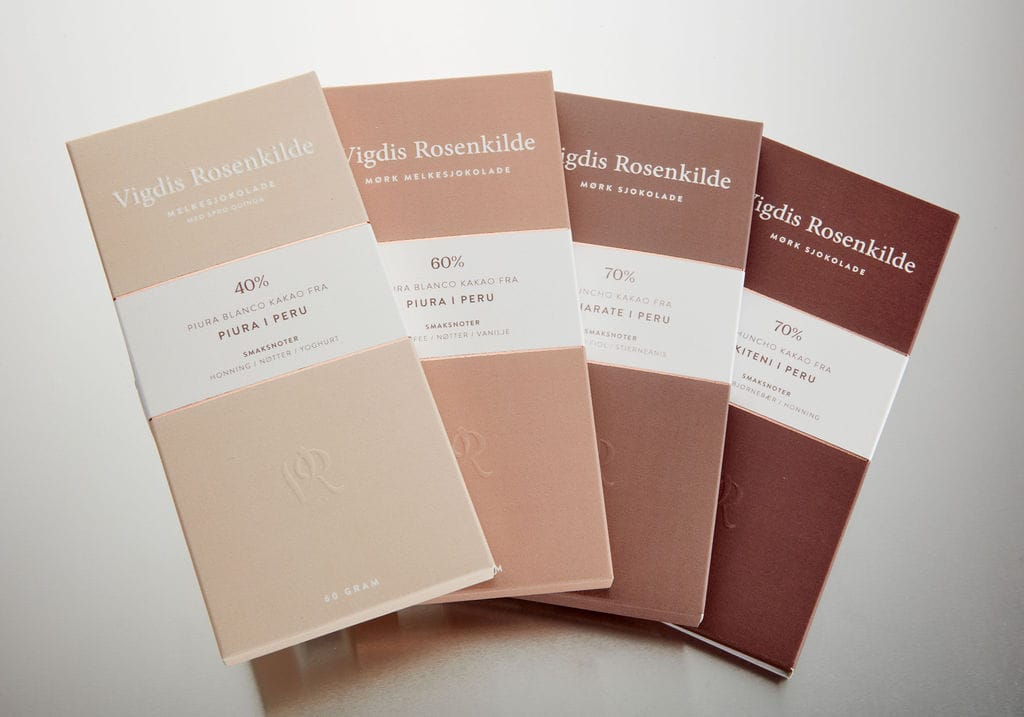
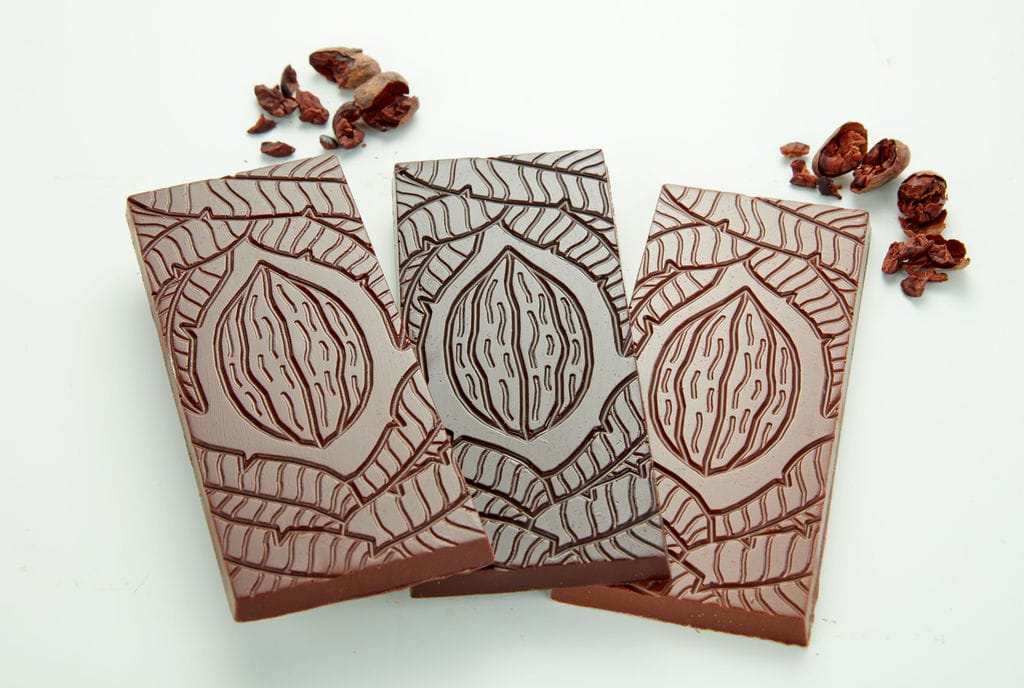
That’s fantastic! How many different bars do you make? Do you make any flavoured things?
VR:
At the most I have had six bars. I had one milk with quinoa, and one dark milk with 60% cacao. The rest have all been plain dark chocolate.
Right now, I chose to only make two bars, as I couldn’t go to Peru myself. Because overseeing everything is such an important part of the process, I love to be there. Now obviously the taste is a little bit different, but not in a bad way. I love the product now! But it doesn’t have my strong signature as it would. But I am so thankful for Cacaosuyo and everybody involved. Without them and a few others who have helped me a lot it would have been a lot more difficult. It was challenging to run the production from here, in a different time zone.
IICT:
Which courses have you taken at the IICCT, and what are your plans for your work?
VR:
I’ve done Level 1, 2 and 3. I was in the first group doing Level 3 in Peru. The network of people working with cacao in Norway is super small. There are a lot chocolatiers, working with couverture, but not many who have experience with beans. Once I found out about the courses I went as soon as I could.
I want, most of all, to inspire other people to be curious and learn more about cacao and chocolate.